Art Gets Hot – interview with Alex Kelly & David Pledger

David Pledger and Alex Kelly: Art gets Hot!

http://www.theartandthecurious.com.au/david-pledger-and-alex-kelly-art-gets-hot/

By Celeste Hawkins

One of the topics that is hot right now and will continue to be is art and social change. This weekends forum 2970 º The Boiling Point” on the Gold Coast, which will see a combination of local and international innovative creatives come together,promises to be an event for futurists,artists, activists,cultural workers, academics and those interested in social change. And with the impressive line up, this is undoubtedly the case. Stelarc, Alex Kelly, Liam Young, Dr Daniel Glaser and Alex Monteith will take centre stage. What else is so great to hear is that the Gold Coast Mayor-Tom Tate is very supportive of the arts, so it will be interesting to see how this support helps to develop the art scene there into the future.

Ahead of the big event, I have spoken to Curator David Pledger and Australian filmmaker and activist, Alex Kelly. 
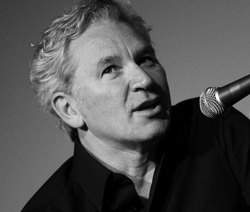
David-Pledger-headshot_wb_speaker

David Pledger

Firstly, I asked David how he orchestrated the forum, especially in regards to choosing the particular speakers that he has:

“I think of the speakers as a constellation of five points in a galaxy of knowledge and imagination. I wanted a certain chemistry of positions, points of view and different qualities of brightness. They are all very distinctive in their use of language and their way of thinking and approaching ideas. But their starting point is the same – they are human beings interested in and grappling with the things that occupy the time, space and thinking of all human beings.”

So why hold the forum on the Gold Coast?

“The Gold Coast does not have the constraints of other Australian cities. It’s operating at a high rate of evolution in terms of its identity, which is always driven by cultural imperatives; how we behave and what we do and how we do it defines who we are. Other Australian cities have this worked out and their job is mostly about maintenance. The Gold Coast, on the other hand, is less defined. The stereotypes that used to be attached to it don’t fly anymore so artistic and cultural production are crucial to the process of creating a new identity. It’s this space of play, of aesthetic experience, of a sense of wonder that will determine what the Gold Coast becomes.”
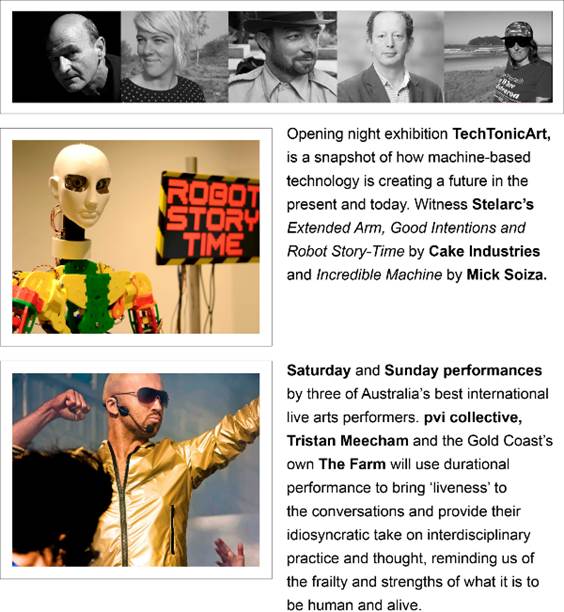
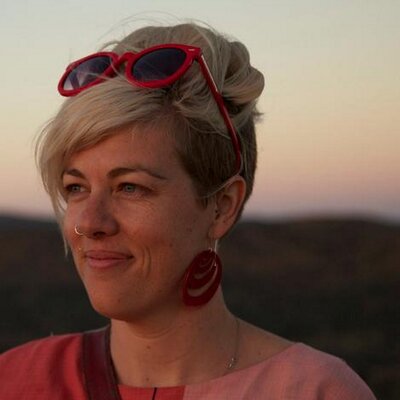
image008

Alex Kelly

Alex Kelly

Alex Kelly grew up with a strong sense of justice. “My mum works in the union movement and my father came form a poor working class background, so I guess that had a strong impact on the way I view things”. At the age of 19, she went to the Jabiluka Blockade in the Northern Territory. These were very formative times in terms of setting her career path with a trajectory for social justice. “I watched the court case when Yvonne Margarula was charged for trespass on her own country. I was in the courtroom. But what I read in the mainstream media was not that of my own experience at the blockade. I was reading the press but not seeing the actual story as it occurred – I didn’t see a reflection of my own experience until I saw the film ‘Fight For Country’ by Pip Starr.”

For a number of years, Alex had the opportunity to work with Pip Starr who made the independent documentary about the Jabiluka campaign. Pip has since passed away, “ Watching Pip’s film I realized that you don’t have to rely on the mainstream media. For me, working with Pip and the rest of the team at SKATV’s Access News was my big epiphany, I could see art, film and social justice all combining and saw the power of telling your own story – and working with other communities to support them to tell their stories.”

It wasn’t long after this that Alex was involved with setting up Melbourne Indymedia, an independent grass open publishing website. Since then, this Filmmaker, artist and activist has worked on community and environmental programs, in Australia and around the world, with a strong focus on social change.

One of Alex’s major works over 6 years was the Big hART Ngapartji Ngapartji project based in Alice Springs and working across Pitjantjatjara communities in Central Australia. Alex is heartened by the uplifting determination of the indigenous community despite all the difficulties they endure. “Despite the severe impacts on indigenous people they show an incredible cultural resilience. Amazing Indigenous artists and filmmakers are leading the way-bridging culture and-film and comedy over the last few years- I believe that it has shifted the Australian consciousness”.

Alex’s film Queen of the Desert – featuring beautifully shot footage by cinematographer Anna Cadden – captures the level of strength in these communities and focuses on the empowerment of cultural stories and leadership-despite levels of structural racism and systemic marginalisation. “I am constantly inspired”, she says. Her short film-Queen of the desert about transgender hairdresser Starlady really captures a level of spirit and creativity in the Areyonga (Utju) community in NT.

“There is such a vibrant youth culture in the desert with the hairstyles, music, culture and fashion, there is a really amazing a blend there –I really wanted to show that in the film. With the NT intervention, remote indigenous Australia is often framed as dysfunctional. Yes, there are social issues but also amazing beautiful vibrant spirited people.”

Alex’s current job that she has been working on for the past 18 months is that of impact producer with world-renowned writer and activist Naomi Klein. The book entitled This Changes Everything  is her third major book, which also has a companion documentary directed by Avi Lewis. “Our philosophy is that books and films don’t change the world, social movements do.” Alex says that people tend to get ‘stuck in silos’, in that they may just focus all their detail on one issue, but that its important to bring a stronger coalition of people and social movements together.

“Basically it seems we are being given two choices when it comes to responding to climate change; “Its too late it’s stuffed” or, “we just need to look after the status quo look and after economic growth and everything will be fine”. Neither of these choices are good.” I asked Alex how she plans on delivering this message to as many people as possible. “What we are doing is building a sophisticated hybrid distribution strategy that has a mainstream release alongside a grass roots distribution strategy.” Alex says she also wants to see movements working together and not just ‘getting the choir signing’, but get the choir signing more loudly and in harmony – more connected to each other.” One of the key things she said was that we know the environmental challenges are happening, its up to creative and collaborative communities to rise up to the challenge of bringing about change. “ It can be a beautiful thing, any time there has been sickness or a flood-the community rallies together to respond to a crisis, we need to tap into that resilience and sense of caring for each other in responding to climate change”

Learning from other speakers at the forum is one of the main things Alex is looking forward to as well.

“Art and culture have significant role in our future. I believe we are facing one of the biggest crises humanity has ever known and the inspiration for the many changes we need to make in terms of how we respond to this moment is going to come from the artists. Now we need the work of the imagination.”


26 – 28 June 2015

Art gets hot with science, politics, sport, technology and architecture

2970° Program OUT NOW.

2970° is three days of simmering thought and action. Fuelled by invention, imagination and ideas, we will interrogate the space where art, science, technology, architecture, politics and sport meet.

Program Highlights:

Take your thinking into the future with Stelarc, Alex Kelly, Liam Young, Dr Daniel Glaser and Alex Monteith who will take centre stage. Together we will forge ideas, collaborate and determine a new way of looking at the world. The future is here.

ART + ACTIVISM FOR SOCIAL CHANGE: ALEX KELLY COMES TO THE GC

Original post: http://blankgc.com.au/art-activism-for-social-change-alex-kelly-comes-to-the-gc/

Alex Kelly is an activist, make no mistake. When she speaks, you can tell that she’s used to having difficult conversations with people about issues that have profound impacts on society. She’s considered and incredibly well-spoken and has a way of breaking down her activist work without using jargon. Trust me, that’s a special skill.

She spoke to me from Alice Springs where she was pushing a friend’s two year old around a park. Originally from a sheep farm outside of Albury-Wodonga it was activism that drew her to the Territory. The Jabiluka mine, to be exact.

“That’s the first time I visited the Northern Territory,” she said. “In 1998. I moved to Coober Pedy in 2003 to support a campaign there for Indigenous women against a nuclear waste dump proposed near Woomera. They were successful and then I moved to Alice Springs after that.”

Alex has been working with arts company Big hART for a long time. In fact, she started working on a project in Coober Pedy which she continued in Alice. Called Ngapartji Ngapartji, which means I give you something, you give me something in Pitjantjatjara – a concept of reciprocity and exchange. Alex explained what its focus was.

“It was a bilingual, cross-cultural project,” she said. “Working in Pitjantjatjara and exploring the impacts of the Maralinga atomic tests on communities in the central desert.” The project also looked at using Language as tool for crime prevention. As well as shining a spotlight on the significance of maintaining and promoting Indigenous languages it also had a very specific end goal.

“We were working towards getting a National Indigenous Language Policy established,” Alex told me. “And that happened in 2009; an example of using an art project to promote and change policy.”

I’m curious now as to whether Alex mastered the Pitjantjatjara language while working on the project and she laughs, “I’m a very basic speaker.”

The project resulted in an online language course as well as a theatre show in both Pitjantjatjara language and English. People would learn some language in the online course before coming to the show. Alex said they ran ten seasons of the show including the Melbourne Festival, Perth Festival, Sydney Opera House and the Dreaming Festival in Woodford.

We chat about concepts around activism and how society often pictures the extremes: locking on to gas lines, abseiling down. Alex says there are lots of ways of facilitating and influencing change and we need all of them.

“I really support what people call diversity of tactics and I’ve been involved in all different types of activism,” she said. “But I have a particularly strong interest in art and culture and making change.”

Alex believes that the way our society functions and is run is based on the stories that we tell as well as the stories that we believe in. “So art and culture have a really powerful role to pay because they can introduce new ideas and new ways of thinking of things into the culture.”

“And the profile of arts projects – like when we did a big show in the Sydney Festival and then talked about Indigenous languages, provides a pretty powerful platform to talk about things.”

Alex has travelled the world making documentaries and working on a large range of political projects, with a focus on art and culture in her approach. At the moment she’s working on a project called This Changes Everything with Canadian author and social activist Naomi Klein and her journalist and documentary-maker husband Avi Lewis. She just spent seven months in New York as Klein’s book was being published.

The book was published immediately prior to the People’s Climate March, the largest climate march in history with nearly 400,000 people participating in the streets of New York City. The march was a response to the UN Climate Summit of world leaders which took place in the city two days later.

WATCH: Nocturnal Warriors from Alex Kelly on Vimeo (5mins)


Alex believes that books and films don’t change the world but social movements do.

“A lot of my work is about finding ways to put the book and film at the service of movements,” she said. And the climate movement is just one of those. She lists anti-fracking, labour rights, access to public transport and Black Lives Matter amongst others.

“I really think about how we can share our platform and the convening power that Naomi has, to bring people together to have a conversation to reframe climate change,” she said.

“And we’re really looking at climate change not as a green issue, but as an economic issue, and unpacking why some people don’t want to take action, realizing that a lot of that is connected to their interest in maintaining the economic status quo.”

Alex argues that responding to the climate crisis is going to be an amazing thing for the world. She says we can fix things that are broken and make a more just world in the process.

Alex goes on to talk about a new genre in the arts world called Cli Fi – climate science fiction.

“There is no shortage of films that tell us about the doom and impending disasters coming, but we don’t have a lot of stories that looks at a future powered by renewables and local economies or sustainable agriculture. What we need and what artists are really capable of is a new vision for the future – not based on disaster and resource wars – but based on creativity and mutual collaboration.”

“Theatre, visual artists and other practices assist us to imagine a different future.”

But Alex says climate change is just one of many issues that artists can impact.

“We’re always told that this is the status quo, that it’s normal and inevitable,” she said. “But we can see from droughts, floods, fires, bank bailouts, economic collapses, that there is a lot of upheaval and change happening all the time. So we actually need different stories to think about how we respond to that and to be able to think that we can all play a part in creating a different future.”

So what does that future look like?

alex_kelly_headshot

Alex Kelly. Image courtesy Kristelle Sherwood.

“I’m lucky enough to live in a really connected and strong community in Alice Springs on a property very close to my neighbours and we share a lot of resources,” Alex said. “In some ways I don’t think the future I imagine is that much different to now except that we won’t have as big a gap between the extremely wealthy and the rest of us.”

“And we will see the majority of people given access to education, health care, transport – because if we have a society where everybody has access to be healthy and to participate in that society, we’re going to see a much more innovative and creative world because everyone will have the opportunity to express their potential.”

I ask Alex about the key message she’ll be bringing to the Gold Coast when she speaks at 2970° The Boiling Point running 26 – 28 June and she says she’ll been putting a lot of thought into her presentation.

“A lot of it is about the critical role of artists in imagining the future,” she said. “And the need for new narratives to respond to crisis, to see it as an opportunity and a gift to create a more just world.”

_ _ _ _

Alex Kelly is one of the internationally renowned future thinkers who will take centre stage on the Gold Coast as part of 2970° The Boiling Point from 26 – 28 June. More atmoregoldcoast.com.au/2970.

Feature image by Rusty Stewart & Anna Cadden: still from Nocturnal Warriors, a short film starring anti fracking bilby superheros.

2970 Degrees – The Boiling Point – Art & Activism talk links

Big hART

This Changes Everything 

Steve Lambert artist

Ursula Le Guin acceptance speech

Carbon Tracker research

The Guardian re NASA temperature rise studies 

Ngapartji Ngapartji 

Ninti – Pitjantjatjara learning website

Nothing Rhymes with Ngapartji documentary 

National Indigenous Languages Policy

First Languages Australia

Binibar books

Occupy Sandy

BRITDOC

Beautiful Solutions

People’s Climate March

Pope’s encyclical

Jobs, Justice & The Climate march Toronto

The Australia Institute on fossil fuel subsidies

Clive Hamilton Scorcher

Liberate Tate 


We can’t defend the arts without discussing the ideology driving the cuts

captalism works for me

Capitalism, It works for me. By Steve Lambert

In May’s federal budget Attorney General & Minister for the Arts George Brandis announced a $104.7M cut to the independent Australia Council for the Arts and the establishment of his own National Programme for Excellence in the Arts (NPEA).

Artists have been responding loudly and creatively to the announcement, especially the critically important small to medium sector; where over 145 companies will be feeling the impact of the cuts. The #freethearts campaign is coordinating a whole-of-arts sector delegation to Canberra this Thursday, there is an online petition with over 11,000 signatures and the brilliantly cheeky Art of Brandis is going viral.

However, we won’t be successful in defending a single sector from the logic of austerity – artists need to stand up against the ideology driving these cuts, not just the cuts themselves.

Rather than simply arguing to protect funding for the arts, it is critical – to the arts sector and our society more broadly – that artists take a deeper look at the worldview held by this government that is driving these cuts and the cuts to just about every other sector in the public sphere.

This is not a moment for artists to be polite and argue for the merits of the arts alone. It is a moment that should instead inflame a critical dialogue about power, justice and the kind of Australia we want to live in.

We need our artists, poets and storytellers to be reflecting back to us a critique of the worldview of this government who seem hell bent on cutting public funding to essential services, building a super surveillance state, breaking international law in pursuit of their brutal border policing and passing massive tax subsidies on to the resource sector – with no heed for the climate crisis we face.

We need art and stories that help us understand that there are other options, other ways of seeing ourselves and each other so that we can demand a different kind of leadership alongside truly fair and just policies from our politicians.

I would love to see discussions widened to include the impacts of the secretive Trans Pacific Partnership (TPP) when arts delegates head to Canberra this Thursday. The TPP is a proposed mega free trade deal between Australia, USA and ten other countries. We know – thanks to Wikileaks leaking the draft intellectual property rights chapter – that this trade deal could see digital downloads made criminal offenses and that there are significant threats to press freedom which could severely impact on journalists and whistleblowers.

With these kind of proposed trade laws the free trade, free market ideology marches on. And under this kind of ideology there is no way we can expect to see robust or independent funding for the arts.

We also know that these free trade deals are going to have a profound impact on our ability to protect the environment, take action on climate change and build our local economies.

Let this moment not just be about defending the arts funding patch, but about taking stock of the bigger picture and bringing an understanding of neoliberalism to our defense of the arts.  And please let more artists stand in solidarity with others campaigning against policies created by the same maddening ideology – against the closures of remote indigenous communities, in defense of the Great Barrier Reef and in solidarity with asylum seekers.

We need to talk about the destructive worldview driving these policies, we need our commentators and artists to be naming what is happening, we need to understand this, we need to build solidarity between all the sectors who are feeling the pain of this slash and burn agenda and then we need to fight, together, to build something different.

reflecting on 2014 – social movements

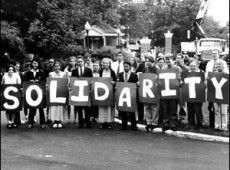
soli2 soli

“We call it the Great Turning – and see it as the essential adventure of our time. It involves the transition of the doomed economy of industrial growth to a life sustaining society committed to the recovery of our world. The transition is already well underway.”  – Joanna Macy

This year I’ve found incredible inspiration in the work of activists, organisers and social movements around the world. I’ve been lucky enough that my work means paying attention to and connecting with movements so I’ve crossed paths with even more campaigns and organisers than usual. It’s been a year of remarkable victories and – from my vantage point – ever greater connection, sharper analysis and greater influence across movements.

I think we often underestimate the power of social movements – the mainstream as they are not always paying attention, the elite and the establishment because they don’t want to promote the power of organising and don’t tell the stories of social movement victories – and paradoxically – by social movements and activists themselves; perhaps because we don’t quite dare to believe our own power, are used to being marginal, or we swallow the establishment media line and don’t tell our own stories loudly enough?

Whatever the reason, I believe that social movements and the power of organising are often grossly underestimated – and I think acknowledging their influence and power is critical to building more power and contributing to the transition to justice and true sustainability that the world so desperately must make.

As I’ve travelled and paid attention this year I’ve noticed a palpable buzz as movements gain momentum, connect with each other and build power – particularly across critical issues such as racial justice, climate change, state surveillance, indigenous land rights and international trade deals. It’s not just me – other people are excited – they feel this moment growing…..

So in the spirit of paying attention to movements I wanted to mark the end of 2014 with some shout outs to campaigns that have made my heart swell;

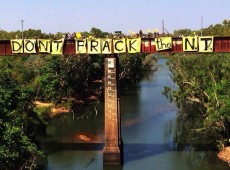
frack nat

NORTHERN TERRITORY

Close to home the brilliant victory of the Traditional Owners of Muckaty against the proposed nuclear waste dump after a ten-year battle was a stand out win.

I am so inspired by the tenacity of the Beyond Nuclear Initiative and the Australian Nuclear Free Alliance ANFA; in particular a huge shout out to Nat for her strength and commitment to stand so solidly with Diane, Kylie and family. Thankyou. This victory is not just for Muckaty – but it creates a choke point for the expansion of the nuclear industry globally.

Sisters and Brothers NT are rocking it – from being an informal network to participating in tv programs, at national and international conferences, running trainings at the Alice Springs hospital the org now launched itself as a formal entity – mega  congratulations to everyone involved.

Also really amazing this year was the community organising around liquor restrictions and racialised policing in Alice Springs. Huge respect for everyone involved in the documentation of police and raising the issue publicly.

This year the Borroloola community stood up as part of the Global Frack Down day of action – fighting against both the existing mine and standing up against proposed pipeline and fracking on their country. (Also I can’t quite believe that there is still a zinc mining dump site that is on fire in Borroloola – it has been burning for months).

Another powerful campaign gaining traction in the NT is the Protect Arnhem Land movement opposed to the madness of offshore gas extraction in beautiful Arnhem Land. I’m looking forward to the Stingray Sisters doco series about some of the women involved in this campaign.

And lastly – after a few years break I am proud to have rejoined the board of the brilliant Arid Lands Environment Centre. With the huge federal and territory government cut backs to green groups and the ever expanding extractives industry we need ALEC more than ever – sign up to become a desert defender here.

The rise of Blockadia is, in many ways, simply the flip side of the carbon boom.

Blockadia is not a specific location on a map but rather a roving transnational conflict zone that is cropping up with increasing frequency and intensity wherever extractive projects are attempting to dig and drill, whether for open-pit mines, or gas fracking, or tar sands oil pipelines.

What unites these increasingly interconnected pockets of resistance is the sheer ambition of the mining and fossil fuel companies: the fact that in their quest for high-priced commodities and higher-risk “unconventional” fuels, they are pushing relentlessly into countless new territories, regardless of the impact on the local ecology (in particular, local water systems), as well as the fact that many of the industrial activities in question have neither been adequately tested nor regulated, yet have already shown themselves to be extraordinarily accident-prone.

What unites Blockadia too is the fact the people at the forefront— packing local council meetings, marching in capital cities, being hauled off in police vans, even putting their bodies between the earth-movers and earth—do not look much like your typical activist, nor do the people in one Blockadia site resemble those in another. Rather, they each look like the places where they live, and they look like everyone: the local shop owners, the university professors, the high school students, the grandmothers. – Naomi Klein This Changes Everything

gas lock

AUSTRALIA

Increasingly across Australia beautiful, powerful and successful expressions of #Blockadia can be found. Whilst the Abbott government is firmly in the grip of the fossil fuels industry the movement for action on climate change is growing stronger every day. The Lock The Gate Alliance is gaining momentum with deep community organising in regional communities across the country.

My social media feeds have been full of people taking direct action against the Maules Creek mine in NSW – having grown up in regional faming community the shots of farmers locking on hits a chord in me like nothing else.

The victory at the Bentley Blockade stopping Santos from setting up in gas drilling in Northern NSW was a critical win for bolstering the movement nationally.

Quit Coal Victoria had a great victory with the Victorian State Government announcing a moratorium on fracking on the eve of a planned horseback protest.

The recent Victorian election was practically a referendum on the proposed East West Link road – and the result is a resounding success for the people that opposed the unnecessary and stupidly expensive expansion.

Pacific Climate Warriors blocked the Newcastle coal port with hand carved canoes. These images of strong, proud, fierce activists blockading the seas, the ANZ corporate offices and visiting the Maules Creek blockade are simply brilliant.

Despite the continuation of appalling border policing policies there has been sustained resistance and solidarity with asylum seekers anti deportation actions, the expansion of the Asylum Seeker Resource Centre, occupations of government offices and persistent expression of solidarity in the face of the violent and illegal treatment of refugees.

Earthworker Co-operative – No jobs on a dead planet! – this year they ran a crowd funding campaign and opened a new solar factory in Melbourne – they are such legends.

The power of this ferocious love is what the resource companies and their advocates in government inevitably underestimate, precisely because no amount of money can extinguish it. When what is being fought for is an identity, a culture, a beloved place that people are determined to pass on to their grandchildren, and that their ancestors may have paid for with great sacrifice, there is nothing companies can offer as a bargaining chip.

 No safety pledge will assuage; no bribe will be big enough. And though this kind of connection to place is surely strongest in Indigenous communities where the ties to the land go back thousands of years, it is in fact Blockadia’s defining feature. – Naomi Klein, This Changes Everything

 That connection to this place and the love that people have for it, that’s what Arch Coal doesn’t get. They underestimate that. They don’t understand it so they disregard it. And that’s what in the end will save that place. Is not the hatred of the coal companies, or anger, but love will save that place. – Alexis Bonogofsky, This Changes Everything

flood  tate

AROUND THE WORLD

Globally there are far to many stories to give justice to in one blog post, but I’ll make a few quick shout outs here;

Podemos in Spain are tearing it up – emerging from the Indignados movement they’ve only existed as a formal party for mere months and they are already the second biggest political force in Spain.

Liberate Tate and Art Not Oil in the UK have continued to pressure institutions to break ties with the big oil companies through savvy installations and political performances and are making great headway on their campaign. See more at Platform‘s website.

No Dash for Gas in the UK are blocking and protesting the expanding gas industry in the UK at every turn.

There’s some amazing work being done in housing rights in the UK with the recent victory of the New Era Estate campaign and the visibility of the e15 mums.

One of the most inspiring people I had the opportunity to spend time with this year is the human rights lawyer Jacqueline Moudeina from Chad who is taking former dictator of Chad to trial in Senegal.

In North American #Blockadia is also cranking; the campaign against the Tar Sands and XL Pipeline and going strong; in Montana the fight against Arch Coal continues, resistance to Tar Sands is cranking in Utah and the movement for racial justice is gaining momentum see; Ferguson Action and BlacklivesMatter.

The People’s Climate March was a momentous moment and Flood Wall Street made clear the critical links between real climate action and capitalism.

Free West Papua seems to be finally getting more attention as more people around the world raised the West Papuan flag for a global day of action than ever before.

In the digital sphere many great organisers continue to push for justice and freedom as more and more evidence of the growth of the surveillance state comes to light.

This list doesn’t even scrape the surface and as I am completing it I am aware of how many many more things I want to mention and add in! (Like Rojava and Hong Kong and and and and…..!)

For many more inspiring campaigns check out this Environmental Justice Atlas and the ever growing gallery at Beautiful Solutions.

My goal for 2015 is to pay even more attention to the role and influence of social movements and encourage others to do the same.

In solidarity and with love, here’s to a transformative year.

 * pics all sourced from the internet without attribution as unable to verify – apologies to the photographers!

reflecting on 2014 – what I got up to

What a bloody great adventure of a year! I built a house out of mainly recycled materials with the help of some wonderful friends and I travelled extensively connecting with activists and social movements around the world.

I’m working with wonderfully creative, gutsy, generous, rigorous and smart people and I’m lucky enough to be part of the team of the brilliant This Changes Everything project.

photo 1 photo 2

2014 has been a very affirming year. I think no matter how much I’ve tried to resist the Australian ‘cultural cringe’ and ‘tall poppy syndrome’ these are pretty pervasive cultural norms. After spending the last 11 years in the desert I felt that somehow – even though I consider the Territory to be one of the most dynamic, innovative and challenging places to work – my skills and experience didn’t match up.

However, the more I travel and the more projects I come across the more I realise how unique and important the work of Big hART and many of the projects that I know of and have worked on in Alice Springs – projects like Ngapartji Ngapartji, Akeyulerre, ALECBrothers & Sisters NT, Elbow Workshop, 8 Hele Cres, Starlady’s salons, 8MMM (to mention a tiny few) – truly are. This is both a relief and a reminder that the big western cities are not the most powerful places and that the world is much more complex and interesting than that.

2013 wrapped up with Queen of the Desert having screened at over 45 film festivals and Big hART presenting Namatjira in London.

I joined the team of This Changes Everything in November 2013 and went to part time in my National Producer role with Big hART.

In early 2014 I moved back to Alice properly with a mission to build a shipping container and silver bullet house on Basso Island (my block of land). I traded my old dodge truck with my mate Giles who built me the amazing deck and in August the project was complete and I moved in!

deck home

The work year kicked off with a big focus on supporting Big hART to negotiate a full range of performances and events to premiere in the October Melbourne Festival program including staging Hipbone Sticking Out and Murru and hosting a Big hART film retrospective and a Big hART process master class at ACMI.

I also rejoined the board of the critically important Arid Lands Environment Centre.

After a period of deep reflection I made the big (and emotional) decision to take extended leave from Big hART in May to focus on This Changes Everything and take up the opportunity to work with the visionary Bertha Foundation.

I’ve joined a fabulous small team of folks working to develop an activism portfolio for Bertha – watch this space!

As part of my work getting to know the existing portfolios at Bertha I attended two convenings of the brilliant Bertha Be Just program – a convening of the full network in Cape Town, South Africa in March and a convening of the project partners in Berlin, Germany in October. I also attended IDFA – International Documentary Film Festival Amsterdam – to understand more deeply the diverse and ambitious Bertha media portfolio.

My work on film & impact more broadly continued through attending the BRITDOC Impact Distribution Lab in New York in March and maintaining active involvement with a brilliant group of peers; the Impact Producers Group.

The Australian Director’s Guild invited me to give lectures and teach a two day master-class in impact producing in Perth and Melbourne in May and June. I spoke at a number of other conferences and panels through out the year on media, story, activism and change.

I was invited to do some strategy and impact consultation for the forthcoming Frackman documentary. Frackman went on to be selected for the inaugural Good Pitch Australia in November and will premiere in early 2015. I reckon it will be a powerful tool for the movements against gas extraction across Australia – and hopefully the world.

And I started talking with filmmaker Gabrielle Brady about a very exciting documentary project she is developing on asylum seekers – more on this soon.

In September after a few weeks of Basso Island bliss I took off for NYC which is where I am currently based. I landed a couple of weeks before the launch of This Changes Everything and the People’s Climate March; which was a truly brilliant event to be a part of. The moment of silence was incredible – in such a big crowd, in such a big city – and the whole day was a powerful reminder of the role of culture and ritual in the making of change.

pcm pcm2

I went on to travel with Naomi to London for the UK launch of This Changes Everything in October and for the Dutch and Belgian launches in November.

In October I was stoked to take part in a retreat in the Adirondacks with the folks from the Beautiful Universe – Beautiful Trouble, Beautiful Solutions & Beautiful Rising. Aside from being bloody happy for some time under a big sky and stars I was thrilled to discuss tactics and strategies on the role of story, culture, art and networks in change making with such great thinkers and trouble makers.

Also making some deeper friendships  – more than just allies – which is a pretty essential thing when you move to the other side of the globe and leave your amazing posse in Alice!

and and2

In November I was part of a four day brainstorm around the possibilities of Russell Brand’s online series The Trews with a bunch of designers, artists and techies. It was a pretty fascinating experience of rapid prototyping with a group of people who didn’t all already know each other and interesting to explore the tensions between different platforms and ideas about social change.

In the last weeks of 2014 I joined the protests in New York calling for justice for Mike Brown, Eric Garner and to #shutitdown. I’m deeply inspired by the leadership of activists from Ferguson, Black Lives Matter and across the country and am reflecting a lot on how this movement can inspire action on parallel issues of police violence and racism in Australia.

The work year wrapped up with an amazing weekend retreat for This Changes Everything with our education partners Rethinking Schools and Zinn Education Project. With 15 teachers writing lessons and responding to the book and film to think about the best ways to create materials for secondary school classroom use.

I was lucky enough to round out the year with family in Costa Rica where my sister and her husband run the beautiful rural farm and b&b; Casitas Tenorio. Did you know Costa Rica has no army and is already between 94-98% renewable energy wise? Amazing.

photo 1  costa

It’s been a huge year of travel and networks and politics and social movements. I am deeply inspired and feel ready for what I am sure will be an even bigger year as projects take off with Bertha and the This Changes Everything documentary is released.

As 2015 kicks off I’m thinking a lot about love and interdependence.

Our connections to each other will make us stronger and enable us to build the power to create the very necessary and urgent shifts for true and lasting justice.

With love, gratitude and in solidarity, here’s to a transformative year.

Alex

ps all pics by me except for PCM unattributed pics from internet & retreat pics from Beautiful Solutions pals. 

Nocturnal Warriors win hearts and stop fracking!

Last weekend a small group of friends – comprising fellow filmmakers and artists Franca Barraclough, Imogen Semmler, Rusty Stewart, Anna Cadden, Kim Webeck, Melissa Kerl, Beth Sometimes – and I made this film in 24 hours for the Alice Springs Lens Flair 24 Film Festival.

We did a bit of a re-cut later in the week – so this is the director’s cut: (original is here on Lens Flair vimeo).

Nocturnal Warriors from Alex Kelly on Vimeo.

We were stoked that our bilby super-hero anti-fracking film took home the coveted People’s Choice Award!

peoples

We plan to recut a 7 minute (or so) version to send out to some other film festivals this week.

In a wonderful case of life imitating art imitating art the day after the premiere of the film the peak body for the gas industry the APPEA was giving a deputation to the Alice Springs Town Council, which the bilbies attended in finest form. I suspect we might not have seen the end of the Nocturnal Warriors now that the gas industry is eyeing off the NT for fracking and pipeline expansion….

atmeeting bilbyfracker

Congratulations Muckaty Mob!

muckaty

Huge congratulations to all of the Traditional Owners at Muckaty, the Beyond Nuclear Initiative, the ACF campaigners, the lawyers, the alliances and unions who worked together to achieve this great victory!

Not at Woomera, not at Muckaty, not anywhere!

Queen of the Desert now available on The Age / SMH TV

Queen of the Desert is now available on The Age and SMH TV to stream free online at;

http://www.theage.com.au/tv/Biography/Queen-Of-The-Desert-5000286.html

You can also watch here:

Queen of the Desert from alex kelly on Vimeo.

Maralinga; a little known story

This blog was originally posted as a guest post on the Ruthless Jabiru blog ahead of their performance of Maralinga Lament in London.

maralinga1

Only 8 years after the world recoiled in horror at the devastation of the atomic bombs dropped in Nagasaki and Hiroshima, the British government commenced 12 years of atomic testing in the beautiful desert country of outback South Australia.

For over 12 years 1953-1965 – twice as long as World War Two – 12 large atomic bombs and over 600 so called “minor tests” contaminated the South Australian lands of the Pitjantjatjara, Yankunytjatjara and Spinifex people.

The Australian Prime Minister granted permission for the tests without even consulting cabinet. Tapping in to the deep set fear and disregard for the vast interior of Australia and allowing an ‘out of sight out of mind’ mentality to justify the toxic bombing of Australian citizens, most of Australia didn’t even know it was going on and still don’t.

The stories from Emu Field and Maralinga border on the absurd – leaflets written in English dropped from planes to warn nomadic indigenous people the tests were coming, Australian service men topless in shorts playing cricket on the testing fields while the Brits and American wore protective clothing, a pregnant indigenous woman found camped in a crater who lost her baby…..

What is perhaps most confronting of all is that this history is still largely unknown in Australia. Maralinga has been immortalised by our folk hero musician Paul Kelly, there was a royal commission into the tests in 1984/5, servicemen are still campaigning for compensation and huge tracts of the desert will be uninhabitable for ever more – and yet somehow it is still a hidden part of Australia’s history.

In the early 2000s I became aware of an inspiring campaign led by the Kupa Piti Kungka Tjuta – the Senior Women of Coober Pedy – against a proposed nuclear waste dump in South Australia. These women remembered the bombs from the 1950s and they didn’t want that poison on their country – they initiated the inspiring and victorious Irati Wanti – The Poison, Leave It campaign and prevented that waste dump.

Hearing their stories from Emu Field and Maralinga I was inspired to learn more about the story, and together with Scott Rankin and Trevor Jamieson established the Big hART Ngapartji Ngapartji project.

Ngapartji Ngapartji was based on Arrernte country in Mparntwe (Alice Springs) from early 2005 to mid 2010. Ngapartji Ngapartji had many layers involving language learning, teaching and maintenance, community development, crime prevention, cross cultural collaboration, and creating new literacy training models as well as film, art, policy and theatre making.

The stage production explored Trevor’s family’s experience with the atomic tests – many of them were moved west off their country in cattle trucks before the tests took place. This dislocation – becoming refugees in their own country – and its impact across subsequent generations was told beautifully in this award winning play.

As well as the touring theatre productions the project produced a documentary film for ABC TV in 2010, Nothing Rhymes with Ngapartji, which followed Trevor and the team taking the play back to country in Ernabella community, South Australia. For many people this was the first time they had talked publicly about the bombs – as Anangu culture reveres the deceased with silence – and many of the stories had not been passed down to younger generations. Nothing Rhymes with Ngapartji can be watched in full online.

It remains clear that the stories of Maralinga still need to be shared and acknowledged, and plays, music and storytelling play a critical role in drawing attention to Australia’s atomic history and shameful indifference to the desert and its people.

Ruthless Jabiru and Lara St. John perform Maralinga Lament at the Union Chapel, London at 19:30 on Monday 14 October. Tickets are £16 advance from the Union Chapel online store or £18 at the door.

One_Tree_3