Dumbo Feather – How Systems Marginalise

Director Maya Newell reveals the systemic barriers she encountered in trying to get the Indigenous cast of her latest film, In My Blood It Runs, to the world premiere in Toronto.

It’s Friday morning and I’m on a plane bound for the Hot Docs International Film Festival in Toronto for the world premiere of a new documentary I collaboratively directed, In My Blood it Runs. Shot over two years in the Northern Territory, the film shares the story of Dujuan, a 10-year-old Arrernte/ Garrwa boy who must navigate growing up black in Australia. Thrillingly, Dujuan, his mother Megan and five other family members are sitting beside me. For some, it’s their first flight; for all, it’s their first time overseas. They’re excited. I’m exhausted.

Trying to get everyone to Canada has been a Kafkaesque nightmare. It has reinforced just how hard it is for people facing disadvantage to navigate systems and experience opportunities in the way that most Australians take for granted. For me, travelling to North America requires a few easy clicks on a screen. For the other members of our team, compiling travel documents is an endless administrative process.

Home in Alice Springs, Megan and I set about getting her identification documents. In exchange for a stack of paperwork and $38, the NT Office of Births, Deaths and Marriages issue Megan a copy of her birth certificate. Twenty minutes in a queue at the Motor Vehicle Registry teaches us that identity requires consistent spelling, and Megan’s birth certificate was one letter short. There’s another $38 to obtain a correctly spelled birth certificate before zigzagging another snaking queue to have the ID reissued. The following day we discover that Megan’s last name is misspelled on her Medicare card and that her middle name is incorrect on her Centrelink card. Each inconsistency invalidated the rest of her ID and resulted in a banal, longwinded interaction and a new mountain of paperwork. This was the case for almost every piece of identification for the seven First Nations people travelling. With two weeks until the film’s premiere, an array of 18 incorrect identity documents lie on my kitchen table. How did so many bureaucrats assume that it didn’t matter enough to ask how to spell a person’s name?

The most important lesson I’ve learned while making this film is that family is everything. If any one of Dujuan’s family was left behind, they would question why anyone went at all. It’s this continuum of this unconditional love and mutual care that gives these families the sustenance to survive our impenetrable systems of oppression. This trip was an opportunity to support Dujuan, who would be courageously sharing his story for the first time on an international stage. Why was it so hard to get a family—with an explicit business purpose to travel—as invited guests of North America’s largest documentary festival, overseas for six days?

Over these last months, I have demanded attention to the misspelled names and developed an unapologetic register when speaking to all levels of bureaucrats. But in leveraging my privilege to solve this ludicrous administrivia, I was struck by how corrosive this process is to the collaborative dynamic we had established with the family. I was forced, again and again, into the colonial role of “saviour”—one that we, as a team, have always explicitly tried to avoid. This family are my collaborators, mentors, teachers and friends; they have led me and generously let me into their world.

In My Blood It Runs was made in collaboration with those who feature onscreen; we have shared creative decisions, resources, and have worked to ensure that the people in the film are in control of the ways in which they were represented. While not always perfect, we made a big effort to challenge conventional power dynamics. Yet my role as bureaucratic “problem solver” threw these small wins into jeopardy.

Aboriginal and Torres Strait Islander peoples’ stories should always be told with a collaborative approach in documentary because of the violence so often done by misappropriation and misrepresentation. Deep equity-oriented collaboration is fundamental for social justice. In popular media and arts discourse, the notion of the auteur is central. Here, artistic success is heralded by a singular creative vision. Screen bodies ask for the director’s name, festival travel allowances fund the director alone, media outlets want to speak to the director and awards ask for one name to engrave on their celebratory plaque. These funding and distribution architectures diminish community-driven approaches. They put artfulness up against process. Why isn’t ethical co-design driving structural innovation of the film industry?

It was eight days before take-off and after much tenacity, the passport applications were in, but I hadn’t even considered the federal police check.

When asked, “Have you ever been charged, arrested or incarcerated?” Megan and James were required to tick “yes.” In a curt email from the passport office, we were told our only chance to board the plane was if the Australian High Commission in Canada waived the police check. Luckily, we had done the advocacy work here and the High Commission had just posted about our film on Facebook. In response to a carefully crafted email, they granted permission for our travel.

Yet again, my discomfort rose at the realisation that to get the attention of these powerful people, whose goodwill we desperately needed at this final crucial hour, I consciously tapped into their awareness of disadvantage and unfairness. I pandered to a narrative that places them, and me, as saviours. The next email to land in my inbox brought me to a halt. The Canadian Immigration could waive the police check, but they needed details of every offence, documentation of every address and employer since Megan and James (Dujuan’s father) were 18, and a biometrics (eyeball scan and fingerprints) appointment in Sydney. As a result, they surmised: This being the beginning of a holiday week, it’s not going to be possible to get them travel documents on time for the travel dates.

Disheartened and exasperated, I turned to Megan for help. Megan grew up in Alice Springs, she has four kids and has spent most of her teens being a young mum. We’re close in age, and by many counts she has achieved much more than me in her lifetime. She paused and whispered quietly, “I really want to go.” Megan was so committed to being present when our film was first seen by an international audience that she was willing to bear a seemingly endless array of bureaucratic processes that continually brought into question her legitimacy as a trustworthy, responsible human. I rallied.

For a small fortune, we re-booked each leg of the flight to Toronto, secured an emergency biometrics appointment, set to the task of appealing to a worker at the Alice Springs courthouse to access two decades of charges, and set our minds to supporting families to write “declarations of rehabilitation.” Megan spoke while I scribed: Dear immigration, I have grown up as an Aboriginal person in Australia. When I was younger
I saw my family drinking and sometimes driving. While this is no excuse, I didn’t know better. I am working to be the one in my family who makes a better future for my children. For the driving offences I am an unemployed single young mother and could not pay for a license and registration of our car. I needed to take my kids to school, get away and go shopping.

I am sorry. Where the IDs once lay on my kitchen table, court papers lay in piles weighed down by items of cutlery. Ten minutes to close of business, we delivered a document with every private detail available on record about their lives. This trail of administrivia placed me in an uncomfortable position of knowing private things about my friends’ and collaborators’ lives that they may have otherwise chosen not to share.

These attempts to attain official travel documentation have given me a microscopic glimpse into what it might be like to navigate life in Australia as an Aboriginal person. Even with all of the privilege and resources that we had and the pro bono assistance of a qualified lawyer, doctor and accountant, travelling overseas proved almost impossible for a group of First Australians.

For many non-Indigenous Australians, it’s convenient to believe that racism is confined to backwards minds and far-flung areas. What is harder to see is how the social structures that work for many of us perpetuate disadvantage in ongoing and insidious ways. While many of these generous people along the way, I can imagine, felt they did a “good deed” to support our quest to get to the premiere, I wondered whether any of them would work to change the structures of inaccessibility that perpetuate these underlying inequities?

This process has certainly affirmed for me the necessity to challenge these often invisible barriers and to ensure the release of our film goes some way to tackling them—at the very least by naming them and sharing our experiences.

I look over at Dujuan sitting on the plane surrounded by his mother, father, brother, baby sister and both his grandmothers. Peering out the window he anxiously asks, “Maya, how is this big metal thing able to stay up in the sky?” The miracle of flight took the hard work of many people over a long period of time to finally achieve something that we now take for granted, but then felt impossible. His grandmother gives his hand a reassuring squeeze as we taxi down the runway.

In My Blood It Runs will be in cinemas nationally in early 2020, and is launching a multi-year social impact campaign aiming to address structural racism, First Nations-led education systems and youth justice reform. Find out how to see the film and join the campaign at: www.inmyblooditruns.com
The Gate review – In My Blood It Runs

By Andrew Parker, at Hot Docs

A wholly original and impactful look at growing up Indigenous in Australia today, Maya Newell’s equally artful and emotional In My Blood It Runs is one of the standout world premieres at this year’s festival.

In My Blood It Runs follows Dujuan Hoosan, a ten year old boy of Arrernte and Garrwa descent, living in Northern Australia with his mother, Megan. Fascinated and energized by his Aboriginal roots, the fun loving Dujuan might have a future as a spiritual healer among his people. In his community, Dujuan comes to life, but in his decidedly colonialist school, he’s failing, with teachers openly mocking indigenous ways of life in the classroom. Dujuan grows sad and frustrated, with his failing grades taking a toll on his self esteem. He starts going out late at night, getting into trouble, and skipping school, leading himself down a dark path during a time when heavily armed police presence in indigenous communities is increasing and the percentage of Aboriginal youth in juvenile detention centres is a frightening 100%.

Crediting Dujuan and his family members as co-directors and collaborators, Newell (Gayby Baby) lets her indigenous subjects largely tell their own stories. Newell provides them with cameras to capture their everyday lives and ask each other questions that they might hesitate to answer if they were posed by outsiders. This approach gives In My Blood It Runs a pronounced and confident degree of authenticity. It’s a great looking film, and Newell and her team have done an outstanding job of assembling such a culturally specific and politically relevant story, but it wouldn’t be as impactful without the direct participation of Dujuan’s family to guide it.

In My Blood It Runs isn’t only a stark, but frequently loving and hopeful look at the plight of Indigenous peoples in Northern Australia, but also an examination of how negative educational reinforcement takes a toll on young people. It’s impossible to not feel great sadness for Dujuan, which makes his turn towards a bleaker future all the more heart-wrenching to behold.

Island of the Hungry Ghosts – Amsterdam Human Rights Award

Island of the Hungry Ghosts wins Amsterdam Human Rights Award 2018

From IDFA;We are delighted to announce that Gabrielle Brady has won the Amsterdam Human Rights Award 2018 for Island Of The Hungry Ghosts. Presented by Amsterdam alderman Rutger Groot Wassink earlier today, Brady received this prestigious award at a ceremony in the Zuiderkerk.

The footage of migrating crabs on Christmas Island in the Indian Ocean would not be out of place in a nature film. But in her first feature-length documentary, Gabrielle Brady contrasts this phenomenon with another form of migration. Idealistic trauma therapist Poh Lin visits the heavily guarded Australian detention center sited on the island to hold illegal immigrants, many of whom are held there for years without any prospect of release. The calm way in which the conversations Poh Lin conducts with these migrants, together with other observations of the tropical island, make up an intuitively composed, metaphorical mosaic. Nature conservationists rush to the aid of the crabs and the local Chinese community cares for the restless spirits of workers who died on the island a century ago.
With the inauguration of the Amsterdam Human Rights Award in 2017, the City of Amsterdam seeks to focus international attention on Amsterdam as a city of human rights. The award also contributes to raising consciousness of the importance of human rights, both among inhabitants of Amsterdam and beyond. The Amsterdam Human Rights Award consists of € 25,000 and recognizes a filmmaker who has portrayed the theme of human rights with great cinematographic force. This year, the nominees for the Amsterdam Human Rights Award were: Wang Bing, Dead Souls; Gabrielle Brady, Island of the Hungry Ghosts; Leonard Cohen, Flavours of Iraq; Sarah Fattahi, Chaos; Sahra Mani, A Thousand Girls Like Me; Natasha Neri & Lula Carvalho, Police Killing; Dalia Kury, Privacy of Wounds; Anand Padwardhan, Reason; Arthur Pratt, Survivors and Nebosja Slijepcevic, Srbenka.

The jury’s considerations

“It was a great honor to be part of the jury for the Amsterdam Human Rights Award. The nominated films in this category all have crucial stories to share. The filmmakers show unique access to their characters and personal involvement with their subjects and stories. The films we saw give rise to debate and are emotionally disquieting; they provide insight and knowledge. We saw strong testimony, courageous documentaries, forceful confrontations and new human perspectives – films that can influence our perception of history.”

About Island of the Hungry Ghosts

“The Amsterdam Human Rights Award goes to Gabrielle Brady, an artist who, through the language of film, proposes an exceptional way to see reality not only as a story. She also makes powerful use of metaphors in a filmic allegory dealing with contemporary issues of migration. There are hundreds of films about refugees, but this film gives us something special. This film declares that everyone who is involved in this crisis is suffering. It creates an extremely sensitive, disturbing world in which we can feel (physically) how cruel we, human beings, can be towards one another. Brady gives us the feeling that we are all lost souls in search of a home. When people dedicated to helping people in distress succumb to a lack of hope, this represents a very serious situation for us as human beings.”

Jury members

The jury is made up of:Darya Bassel, programmer and coordinator of the industry platform at the Docudays UA International Human Rights Documentary Film Festival in Kiev, Ukraine.

Bruno Jorge, a filmmaker who produces his own projects through the production company João de Barro, founded in São Paulo in 2003.

Kristine Ann Skaret is the co-founder of and a producer with Norwegian-Danish production company Stray Dog Productions, represented at IDFA 2017 with Aleppo’s Fall.

Island of the Hungry Ghosts wins Capricornia Film Award!

https://www.offtheleash.net.au/features/books-film/2018/09/capricornia-film-awards

Screenshot 2018-10-11 12.30.42

Island of the Hungry Ghosts wins Best Documentary at Tribeca!

From the Tribeca Jury:

“The best documentary award goes to a film that demonstrates extraordinary mastery of the full symphonic range of cinematic tools: cinematography, editing, score, sound design and, perhaps greatest of all, an exquisite use of metaphor,” the documentary jury said. “To a film that moved us deeply, impressed us immensely and made us feel we were witnessing nothing less than the emergence, fully formed, of a major new cinematic talent, we are thrilled to award the best documentary award to Island of the Hungry Ghosts.”

See more; https://www.hollywoodreporter.com/news/tribeca-film-festival-2018-award-winners-1106265

Island of the Hungry Ghosts in Tribeca!

Island of the Hungry Ghosts will have its world premiere in Documentary Competition at the 2018 Tribeca Film Festival, New York.

See more on the 2018 program via https://www.tribecafilm.com/stories/2018-tribeca-film-festival-feature-films-guide


Victory for Namatjira family!

Wonderful news from the team at Big hART:

HUGE ANNOUNCEMENT: After 8 years of fighting for justice alongside the Namatjira family, we are absolutely thrilled to announce that the copyright has finally been returned to the Namatjira family. The Namatjira Legacy Trust has entered into a Deed with Legend Press which assigns the copyright in Albert’s works to the Namatjira Legacy Trust, the charitable foundation established to protect and preserve the interests of the Namatjira family and to benefit the Hermannsburg family. This historic resolution is thanks to the support of esteemed law firm Arnold Bloch Leibler who got behind the campaign pro bono, Legend Press and Dick Smith, who stepped forward to negotiate and also provided a donation of $250,000 donation to the Namatjira Legacy Trust. Our huge thanks to you all.

Big hART’s 8 year campaign for justice for the Namatjira family has been supported by many. We’d like to thank Iltja Ntjarra Art CentreBelvoir St Theatre for giving us our first public platform and the Queen for the important recognition she gave to the Namatjira family. We’d like to thank all the institutions, art galleries, partners and funders in Australia and overseas, the cinemas, the film festivals, the journalists who raised their voices in support and all our loyal supporters and community, without this support, the outcome today would not have been possible. #justice4namatjira

See more at;

http://www.abc.net.au/news/2017-10-14/albert-namatjira-copyright-returned-to-family/9050550

http://www.theaustralian.com.au/news/nation/namatjira-landscapes-copyright-breakthrough-opens-way-for-wider-audience/news-story/48b0fade1c16de2b520f178f223a0cd8?nk=d8583337f7b118a483f3422eb8a506d6-1507969662

In the Zone – arriving at the zad

This article first appeared in Overland 27th June 2017

Subcommandante Marcos, Robin Hood, Louise Michel and Spartacus – the Roman rebel, resplendent in green woollen socks rather than the leather boots one might expect – are all impatiently waiting outside the Palais de Justice (courthouse) at Saint Nazaire (in western France). The characters eye off two surly security guards, who grimace back at them from behind their aviator shades.

All these people are here for the lauded ‘Cèsar de la Resistance’ award, to be presented in due course. The police close the small road to traffic, and a red carpet is rolled out, running from the gates of the courthouse to the lectern in the middle of a narrow traffic island. Paté and muscadet (the local bubbly) are at the ready, and women more used to work boots laugh as they attempt to navigate cobblestones in second-hand sparkly heels. Everyone in attendance has made a nod to Cannes fashion with op-shop finery. It’s not your average kind of awards ceremony. Then again, the ZAD is not your average kind of place.

Subcommandante Marcos, Robin Hood, Louise Michel and Spartacus

Subcommandante Marcos, Robin Hood, Emma Goldman and Spartacus

What exactly is the ZAD? Near the village of Notre Dame des Landes in rural Brittany, the Zone à Dèfendre (Zone to Defend) or just ‘the zone’ is comprised of a sprawling 4000 acres of forest, wetlands and fields – fields of cattle, vegetables and hay, permaculture farms and the home of an unlikely alliance of squatters and radicals, farmers and rural organisers. Occupied for eight years, the ZAD is currently the largest autonomous zone in Europe. And it’s under renewed threat from France’s fresh-faced president.

The Cèsar de la Resistance is the first action I attend upon arriving at the ZAD. The occasion celebrates a documentary currently on release in cinemas in France, featuring local inhabitants Christiane and Claude Herbin. The award is both an allusion to the Cèsar awarded at the Cannes film festival, and a cheeky reference to the failed expulsions of the ZAD in 2012 – code named Operation Cèsar by the state. I’m slowly discovering the zone by visiting a few collectives each afternoon by bicycle, in awe at the sheer physical labour and time that has gone into building and growing – quite literally – the resistance here.

Since 1960 this land has been earmarked for an airport, despite the fact that there is already an airport in the nearby city of Nantes, twenty minutes away. Locals have long opposed the airport, and many considered the project dormant and unlikely to cause trouble as they continued to work the land and build their lives here. In the early 2000s the project was resurrected and the state again began to buy up land, offering farmers compensation for leaving. A number of them – including Christiane and Claude, now known as the ‘historic inhabitants’ – refused to move. They realised that they would be unable to defend such a vast tract of land through legal strategies alone, and collectively made an appeal for people to come and occupy the land – so, in 2009 the zone came to be. It exists as an occupation ‘against the airport and its world’, and at the same time a space for experimentation and creation.

2016- bridge action

2016 Bridge action

The farms here are in an older style known as le bocage; small fields between wide hedges made up of woodlands. These create a series of natural corridors between the fields, forests and lakes across the zone. You can spend hours wandering the shaded pathways through scrub and forests, discovering hand-built ramshackle cabins, retro caravans in various states of repair, earthen buildings, old trucks and horse carriages converted to living quarters, and masses of that cheap and modular building ingredient – the wooden pallet. It is a beautiful irony that the potential of an airport on this site has prevented it from being transformed into the larger fields that now dominate modern agriculture in France, sustaining the biodiversity and multiple uses of the land that many now seek to protect.

Over the years, I have visited and lived in many social centres, squats, warehouses and collective projects around the world. I’d read and heard a lot about the ZAD before arriving, but I was still unprepared for the scale, the audacity and the creativity that has gone toward resisting, and simultaneously creating this beautiful haphazard space of possibility that has flourished for these many years.

There are around 200 people living in 60 different collectives across the zone. There’s collectives growing hops and brewing beer and cider, baking kilos of bread, making cheese, growing vegetables for the free market, a pirate radio station, a sports space, a gym, cinemas, a kids’ house and a newspaper with open publishing principles, delivered weekly to each collective – The Zad News.

I’m staying with the collective at La Rolandière. They have opened a welcome and information centre for the ZAD, in an attempt to address the common difficulty of these kind of radical spaces being inaccessible and often intimidating to connect with. The centre was converted from a disused stable in an old farmhouse, and features many pamphlets, books, and maps of the zone. Learning traditional terre paille (cob building) the collective have remade the walls with straw and clay from the zone, and rebuilt the floor and staircase to the attic above. The attic is now home to the Taslu library, which hosts screenings and discussions on themes such as anthropology, Italian autonomous movements and the Zapatistas.

IMG_4379

A map of the Zone à Defendre

If you duck your head and climb through the attic window of the Taslu you can use the walkway to a 20-metre-high steel lighthouse, for a view across the bocage and cow paddocks. This beautiful surrealist inland lighthouse was built collectively over many months, and gently teases at the control tower that would have been built, along with the proposed runway, on a nearby field. It asserts an audacious confidence, by committing to building something large and permanent despite the uncertainty of the struggle. Locals and Zadistes (zone members) often drop by on their bikes with friends and family, climbing to the top of the tower to have a drink and take in the ZAD from on high.

An autonomous project of this scale comes with its own particular politics and tensions, of course, as people attempt to build new systems and ways of living and being while opposing outside forces. Finding ways to manage these tensions, and not be overwhelmed by these forces, will be even more critical in the coming months, as the new Macron government sets its sights on resolving the issue of the airport, and by extension, the ZAD.

The ZAD and the proposed airport featured as a major political issue in the presidential election, discussed on televised debates and in many news articles. Macron’s announced approach is to send in a team of mediators to find a solution without ‘brutality’. This is no doubt a reference to the four weeks of Operation Cèsar in 2012 – during which many people were injured in a huge show of police force, and saw tens of thousands turn up to defend the ZAD.

The ZAD presents a telling conundrum for Macron, particularly as it seems to be among the first issues he is seeking to tackle. Macron is determined to promote his new government as both open for business and leading on climate change – as demonstrated by the appointment of Nicolos Hulot, a former television star and philanthropist, as the Minister for the Ecological Transition. Will Macron finally lay to rest the decades-long question of this airport? And, should it be abandoned, what will be the future of the zone be, now that the state owns the vast majority of the land and the ZAD has become a powerful site of resistance?

IMG_4398

The lighthouse and its walkway at La Rolandière

Resolute not to be set against each other – as farmer versus squatter, if the airport is abandoned – the movement at the ZAD is committed to finding a long-term way to manage the 4000-acre zone collectively. The next six months will prove a dynamic and fascinating moment in the struggle, as Macron promotes his mediation, and the movement recommits to solidarity across the diverse positions and visions for the future of the zone.

The awards ceremony takes place the week that Macron announces the three mediators who will take carriage of the work over the next six months. Claude Herbin – affectionately known as ‘Petit Claude’ – and Christiane exit the courthouse, where they have lodged an application to extend their right to stay in the Liminbout hamlet. Claude and Christiane are the final historic inhabitants of the ZAD to reach ‘evictable’ status; they are also the final nominations for the Cèsar to arrive at the event.

With over-the-top pomp and the official Oscars music blaring, the ragtag crowd of Zadistes open the envelope to reveal the winner, and present Claude and Christiane with the Cèsar – a hand welded trophy of a golden pitchfork impaling an airplane. It is so heavy that they are unable to raise it aloft to celebrate their win; instead, they hold it at chest height and smile at the crowd with gentle joy at the spectacle, and the sentiment.

award

Claude and Christiane with their award

The warmth in honouring the couple demonstrates the strong and deep friendships built between local paysans (farmers) and the occupants at the ZAD who answered their call in 2009. When I see the camaraderie between people here, forged on barricades and in the fields, I can’t help but wonder what ‘Lock the Gate’ might look like if the relationships built on the frontlines at Bentley, or in communities in transition like Hazelwood, had the opportunity to live and build together over many years.

The complexity and the richness of possibilities evidenced in these collaborations – when people at once defend and create together – are the very things we need to examine and work our way through as we face deepening conflicts over resources and the increasing impacts of climate crisis.

For now, I am taken by a childlike wonder as I explore the greenhouses and shacks built from imaginations given free reign, on a foundation of genuine solidarity in fighting together to create something new.

THE ISLAND launches on the Guardian

Christmas Island, off the coast of Australia: here 50 million crabs make their slow and ancient migration from the jungle to the ocean’s edge, while thousands of people seeking asylum are indefinitely held in a high security detention facility. Poh Lin, a trauma counsellor living on the island, bears witness to the dramatic stories and decline of those being detained.

Some speak of the families they’ve left behind and the journey they took to get to the island. Others tell of waiting indefinitely and being exposed to the gradual mental collapse of their friends and family around them. Rarely leaving the detention centre, and with little idea of the natural beauty of Christmas Island, their sessions with Poh Lin are rare moments of human connection.

The island’s crabs come to serve as a metaphor for the ancient and timeless natural movements of migration. Their spectacle sits in stark contrast to the chaotic human movements and entrapment that become senseless and absurd – not just on this island, but around the world.

The Island is commissioned as part of the Guardian Bertha documentary partnership, which aims to tell international stories with global impact.

Watch here.

Climate change from an Alice perspective: Time to act.

I wrote an end of year wrap up for the Alice Springs News Online – original article here

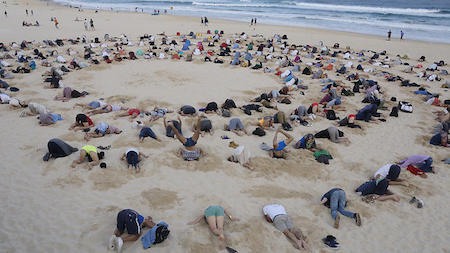
G20 CLIMATE CHANGE PROTEST

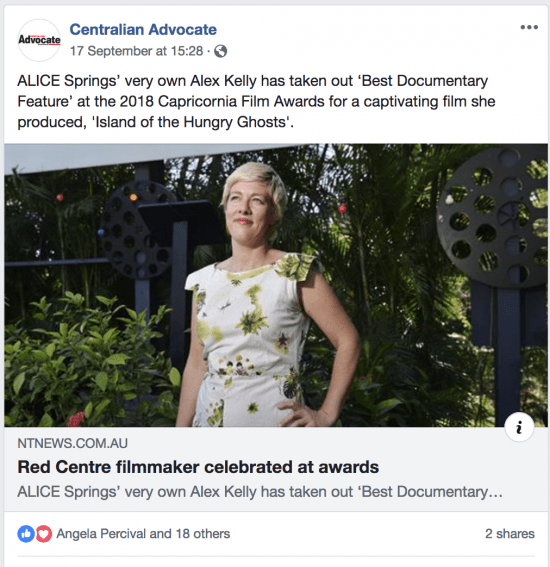
By ALEX KELLY

This is the second story in our Rest and Reflection series published during the festive season and written by people who are making a difference to Alice Springs.

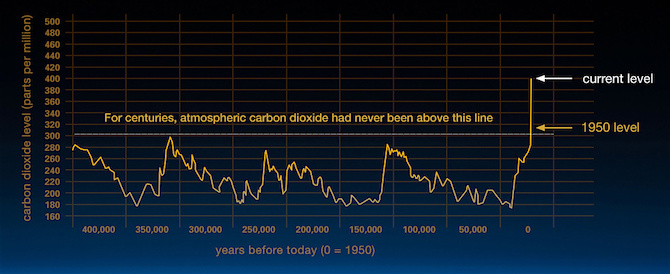
It is official: 2016 was the hottest year on record and in September we passed 400 parts per million of carbon dioxide in the atmosphere.

You could be forgiven for missing this news or not realising it is profoundly significant, as it barely rates a mention – especially not here in the NT.

Even writing on this subject this I know: I’m likely to see fact-muddying responses and outright dismissal in the comments thread.

I’ve spent the last three years working on This Changes Everything, a global climate change project lead by Canadian journalist Naomi Klein and filmmaker Avi Lewis.

My role took me to twelve countries and put me in contact with communities opposing extraction and building alternatives around the world including spending three weeks in Paris during the COP21 UN climate talks this time last year.

Working between Alice Springs and New York and London was surreal in many obvious ways – but more surprising than the scale, traffic or weather it is the lack of concern for the impending impacts that climate change that struck me most when I returned home.

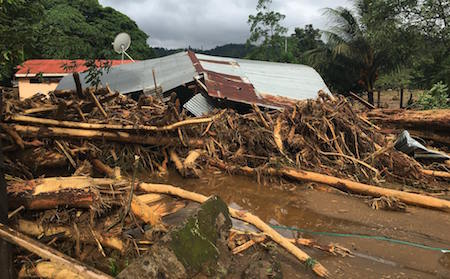
As I was drafting this piece the small village where my sister and her family live in Bijagua de Upala in the north of Costa Rica suffered terrible damage and loss of life as Hurricane Otto made landfall.

At least four people were killed in their village and many houses and properties were washed away by walls of water and mudslides.

This was the first hurricane to ever hit Costa Rica, the southern most ever in the area and the latest ever in the season. The cause of this largest ever forming hurricane in the region has been put down to the exceptionally high sea surface temperatures in the region – 29C.

p2389-alex-kelly-otto-1

Costa Rica is a world leader in renewables generated by a mix of solar, wind and thermal power. Between July and August this year they ran on 100% renewables for 76 days straight.  However, being 100% renewable doesn’t protect against climate impacts and the devastating news sharply reminds me that we are all on this planet together – all responsible for the atmosphere we share.

Here in the NT we are “highly vulnerable” to climate change according to the Federal government’s Department of the Environment. We are likely to see sea level rise, more frequent extreme weather events and temperature rises –  in Alice Springs the number of hot days over 35C is expected to increase from 90 per year to up to 182 by 2070. And we can expect to these changes to have massive impacts on water, weather, tourism, agriculture, disease and health.

So why the lack of action when this could undermine so much about what we love about this place, and perhaps even lead to this region becoming impossible to live in?

I am astounded by not only the silence, not just the wilful indifference, but also by the mad enthusiasm for fossil fuel extraction in the Territory.

I am struck that so many of our leaders, at a local level and Territory-wide, profess a deep love and loyalty to this place, yet by failing to act on climate change they are severely undermining our ability to sustain our lives here.

I hear the same old economic arguments – they are well worn and recycled for every new proposal. Jobs and growth would be great for the NT – but the truth is that real long terms jobs and growth don’t lie in fossil fuel projects.

I am heartened by the news this week of the Gunner government’s establishment of a Renewable Energy Panel – especially to see Alice’s local expert engineer Lyndon Frearson has been appointed to the panel.

However for a shift to 50% renewables by 2030 to even make a dent in our emissions we have to stop pursuing any new fossil fuel projects in the Territory.

We know that to face the climate crisis we need to do three things at once. Firstly we need to stop building any new fossil fuel infrastructure.

Secondly we must put plans in place to rapidly transition to renewable energy. Good thing we know that the technology is ready for us to make this shift and that Alice Springs is uniquely well placed to lead this transition, especially with solar.

And thirdly we have to put in place disaster preparedness to be able to deal with the climate impacts that we have already locked in, those that will occur even if we were to make this transition and end extraction today, like those that just hit my sister’s village.

In this context it is sheer madness that the power station in Alice Springs be “upgraded” to operate on gas.

The gas industry may well be positioning itself as the clean answer to coal and oil, but the evidence shows that this is far from the truth. Gas is not clean, it is not a bridging fuel and it gets us into just as much trouble with emissions and pollution as other fossil fuels.

The proposed Northern Gas Pipeline – for which the pipeline materials are already starting to arrive in the NT even before the proposal meets approval under the NT’s environmental regulations – is another astounding example of the madness of the pursuit of fossil fuels.

Not only is there a strong argument to be made that there will not be a market for the gas extracted in the NT, a infrastructure project on this scale will open vast tracks on the NT to gas extraction and essentially be a carbon bomb – releasing even more harmful fossil fuels in to the atmosphere at the very moment we know we have to stop and shift.

We need leadership from governments, business and civil society to be driving an energy transition that will create jobs, that will create locally owned power and that will be a significant contribution to a much needed reduction of emissions.

The frightening thing is that even though Alice is uniquely vulnerable the truth is there are really no safe zones where we can escape climate impacts. We are all – all of us on the planet – in this together and we have to take responsibility of our energy generation and use both for ourselves and for everyone else who we share this world with.

I hope that 2017 is a year for real leadership on climate action in the NT. It hardly bears thinking about what will happen if it is not.

PHOTOS: Protesters burying their heads in the sand to show their disagreement with Australia’s climate policies in 2014 • Some of the impact of Hurricane Otto, photographed by Pip Varela Kelly, the writer’s sister • NASA graphic showing we passed 400 parts per million of carbon dioxide in the atmosphere.

To donate to the Hurricane Otto relief in Bijagua please head to

https://www.gofundme.com/hurricane-otto-bijagua


p2389-alex-kelly-nasa